There's no I in Team… but what about AI in TEA(i)M HAMERKOP? A (human) intern’s experience

Hi there! My name is Jit Ping, the AI research intern at HAMERKOP. Ending up in HAMERKOP was certainly a whirlwind journey that involved a trip around the world. It started in Singapore, where I was born and studied my A Levels. College brought me to Boston University and subsequently to BU’s London Campus on a study abroad program. The program’s internship component led me to Hamerkop. While most of my peers are on Business or Economics internships, my Data Science and International Relations background was what made me believe that this internship would be a good fit for me. It has most definitely been the case!  

The question that was posed to me at the start of my internship was indeed a lot more straightforward than the title of this blog post. However, I think the title of this blog post saliently captures two points 1) As a workplace, HAMERKOP has a strong team-spirit fostered by daily interactions and various team-building activities 2) My goal during this internship is to find out how various forms of AI can assist with the productivity of our consultants and generate cost savings within the company. In other words, to find out how AI can be a valuable member of a boutique consulting firm such as HAMERKOP.  

The Process  

Our consultants helpfully provided me with a list of tasks they thought AI would be helpful for. I reviewed their “AI wish list” and met up with everyone individually to have a chat. The goal of my first meeting was to better know every member of the team and to find out more about the challenges they faced at work. As a newbie in the carbon finance industry, I learnt a lot from my colleagues who would voluntarily give me readings and explainers so that I better understood the work they did. I was incredibly grateful that every team member was so generous with their time and willing to share with me the information needed for me to succeed.  

After my first round of interviews, I sat down with my supervisor to discuss my findings and to refine the list of tasks previously given to me. The collaborative process was important as we got to communicate our expectations with each other. It also ensured that I could finish this internship with clearly defined goals and outcomes.  

Thereafter, I spent time working on my various tasks. This involved research and speaking again with my colleagues to seek their feedback. I was especially excited to be able to run trials and create simple prototypes as a proof-of-concept to find out what AI can do well and what it cannot do. I was even able to get credits from the AI software Claude in my attempt to build a “HAMERKOP” Chatbot. 

How my first day started…

Life At HAMERKOP 

While I was initially apprehensive stepping foot into a new workplace (and in a very much foreign land), my nerves were calmed the moment I met the team. Everyone was welcoming and seemed to be eagerly anticipating my arrival. As one who struggles with names and faces, it was mildly stressful to realise that everyone in the team already knew my name the first time we met. The small size of the team and the various one-on-one meetings allowed me to settle in comfortably in no time.  

The small interactions at the office are great as well. Amidst stretches of being focused on work, there would always be someone who shares a funny story or engages in some small conversation to break the monotony of work. Lunch breaks were a pleasant time as well. The whole team would eat together, and it provided a welcome opportunity to converse about topics beyond work, allowing us to better understand each other on a personal level. 

How my first day ended!


Lunchtime was not always about food. I took a lunchtime run with Colin (and got a free tour of London out of it!) 

Final Thoughts 

Aside from a vague notion of carbon credits, I knew nothing about the carbon market before I joined HAMERKOP. My time in HAMERKOP has given me not only an insight into the industry but renewed hope for the future of our planet. The time and labour needed to get a project launched is certainly no easy feat. The paperwork necessary to achieve certification and the issuance of carbon credit is rigorous and aims to ensure the quality of each carbon project. (Find out more about Guy and Hazel’s recent trip to India for an idea of what such projects look like) It is heartening to see the industry growing with an ever-increasing number of projects undergoing certification.  

And of course, I cannot end without mentioning how great the team at HAMERKOP was. They made going to work every day a joy and I really treasured my time in the office and the relationships I fostered with every member of the team. These human connections (and the lunchtime routine of solving the day’s Connections puzzle) undoubtedly made my time in HAMERKOP a memorable experience.  

Hamerkop team
2024 Internship Webinar

In this webinar we break down what our interns and associate consultants do on a day-to-day basis (in a Q&A format).

The webinar is presented by two of our current consultants who came through our internship programme: Tatiana de Liedekerke & Hazel Herbst. It is hosted by our business manager Kevin Sowdon.

Feel free to get in touch with us if you have additional questions and be sure to follow our Linkedin and Instagram for more insight into our work and life at HAMERKOP!

Hamerkop team
The Power of Trees: How do trees store carbon and how do we measure it?

Trees play a vital role in the global carbon cycle, absorbing carbon dioxide (CO2) from the atmosphere through photosynthesis and storing it in their biomass. They are one of nature’s most effective carbon capture and storage systems and a critical component in mitigating climate change. Accurately measuring the amount of carbon stored in trees is essential for understanding the overall carbon balance of ecosystems and informing climate change mitigation strategies.

Carbon projects focused on nature-based solutions (NBS) like afforestation, reforestation, wetland restoration or conservation of existing forests are the most prominent type of carbon projects around the world today. In 2023, there were over 175 NBS projects registered on the Gold Standard and over 1,000 on the Verified Carbon Standard (VCS). The number is growing rapidly and reflects the increasing recognition of NBS in climate change mitigation and adaptation. With such potential, it is important to understand how exactly trees store carbon and how this carbon can be measured. Accurate quantification of carbon stocks in forest biomass is imperative in determining the sequestration potential from NBS projects and the resulting generation of carbon credits over the project’s lifetime. The two main types of project structures are ARR (Afforestation, Reforestation, and Revegetation) and REDD+ (Reducing emissions from deforestation and forest degradation):

Besides being designed as carbon projects and generating carbon credits through certification standards, forestry projects are also implemented as Insetting projects, where corporates devise NBS solutions in their own supply chain rather than offsetting elsewhere, in an effort to reduce their own environmental impact and generate emission reduction for their carbon accounting.

How do trees grow and store carbon?

Over the course of their lifecycle, trees maintain the capacity of storing carbon in their biomass, but the rate at which this sequestered carbon accumulates will depend on the tree’s growth stage. Tree growth typically follows a parabolic or S-shaped curve, and this pattern can be attributed to various factors influencing tree growth and different metabolic processes taking place.

Several factors influence the specific pattern of carbon uptake over a tree's life (2):

  • Tree species: different species have varying growth rates and lifespans, leading to differing patterns of carbon sequestration. Fast-growing species may exhibit a more pronounced parabolic curve, while slower-growing species will show a more gradual increase in carbon storage.

  • Environmental conditions: factors such as soil fertility, water availability, sunlight exposure, and temperature can significantly impact tree growth and carbon uptake. Optimal conditions generally promote faster growth and higher carbon sequestration.

  • Disturbances: natural or human-induced disturbances like fires, pests, or diseases can interrupt the typical pattern of carbon accumulation. These disturbances can lead to temporary declines or permanent changes in carbon sequestration.

However, the growth of any single tree within a forest ecosystem can only be understood by examining the successional dynamics that are influencing the development of the forest stand at a particular point in time. The change in forest ecosystems over time can be broadly referred to as forest succession.


Forest succession can be broadly grouped into four seral stages:

  1. Pioneer: in the early stages of life, trees exhibit rapid growth as they invest energy in developing roots, stems, and foliage to establish themselves in the environment. During this period, the rate of carbon uptake is relatively high as trees rapidly accumulate biomass.

  2. Young/Seral: as trees mature, they compete for finite resources and undergo a process of self-thinning referred to as the stem-exclusion phase. As the density of the stand decreases, the growth of the surviving trees accelerates due to increased availability of sunlight and soil nutrients, resulting in a rapid increase in the net carbon accumulation across the forest stand.

  3. Maturing: as trees mature, their growth rate slows down, but carbon sequestration continues. This transition occurs as trees shift their energy allocation from rapid growth to maintaining existing structures and initiating reproductive processes. While the rate of carbon uptake may decrease, the net amount of stored carbon continues to increase due to the overall increase in size and biomass of the tree.

  4. Steady State: in the later stages of their life, trees may experience a stagnation in growth. The concept of steady state is important for understanding the long-term potential of forest carbon storage In steady state climax, forests continue to sequester large amounts of carbon in their now significant biomass, preventing its release into the atmosphere. Even in death, large snags (dead trees) and decaying woody debris on the forest floor continue to play a vital role in supporting biodiversity and maintaining the hydrological function of forest soils, in turn facilitating significant accumulations of organic carbon in belowground ecosystems.

Understanding the dynamics of carbon uptake over a tree's life is crucial for accurate carbon accounting and evaluating the role of forests to mitigate climate change. Knowing when trees reach their peak carbon storage potential helps prioritize forest management practices for long-term carbon sequestration benefits.

The role of trees in carbon storage

Understanding the contribution of trees in carbon storage requires evaluating both aboveground (AGB) and below-ground biomass (BGB). AGB refers to the carbon stored in the visible components of trees, such as the stem, bark, branches, and foliage. BGB refers to the root network of trees below the soil surface and includes both large structural roots as well as fine root networks. AGB represents a significant portion of a tree's total carbon storage capacity but the ratio of AGB to BGB will differ with the age (2). type of tree species and stocking density, highlighting the importance of species-specific allometric models to determine forest biomass. Other forest carbon pools include soil organic carbon (SOC), dead woody debris, and litter (yet un-decomposed foliage on the forest floor). SOC is accumulated through the microbial decomposition and transformation of litter and deadwood from the forest floor and belowground roots (3). SOC is also transferred directly from the roots into the soil via root exudates (excretions from root tips). In some ecosystems, such as the boreal forest, the soil carbon pool far outweighs carbon accumulation in AGB and BGB. Only by considering all forest carbon pools including AGB, BGB, SOC, litter, and woody debris (see image below [3]) can a more comprehensive estimate of carbon storage potential in forest ecosystems be obtained.

https://bwsr.state.mn.us/carbon-sequestration-forests

Various techniques are employed to measure aboveground biomass, including field surveys that apply allometric equations, geospatial tools, LiDAR and Infrared. In this blog piece, we will explore these different techniques and how they work.

What is Allometry and how is it used on the ground?

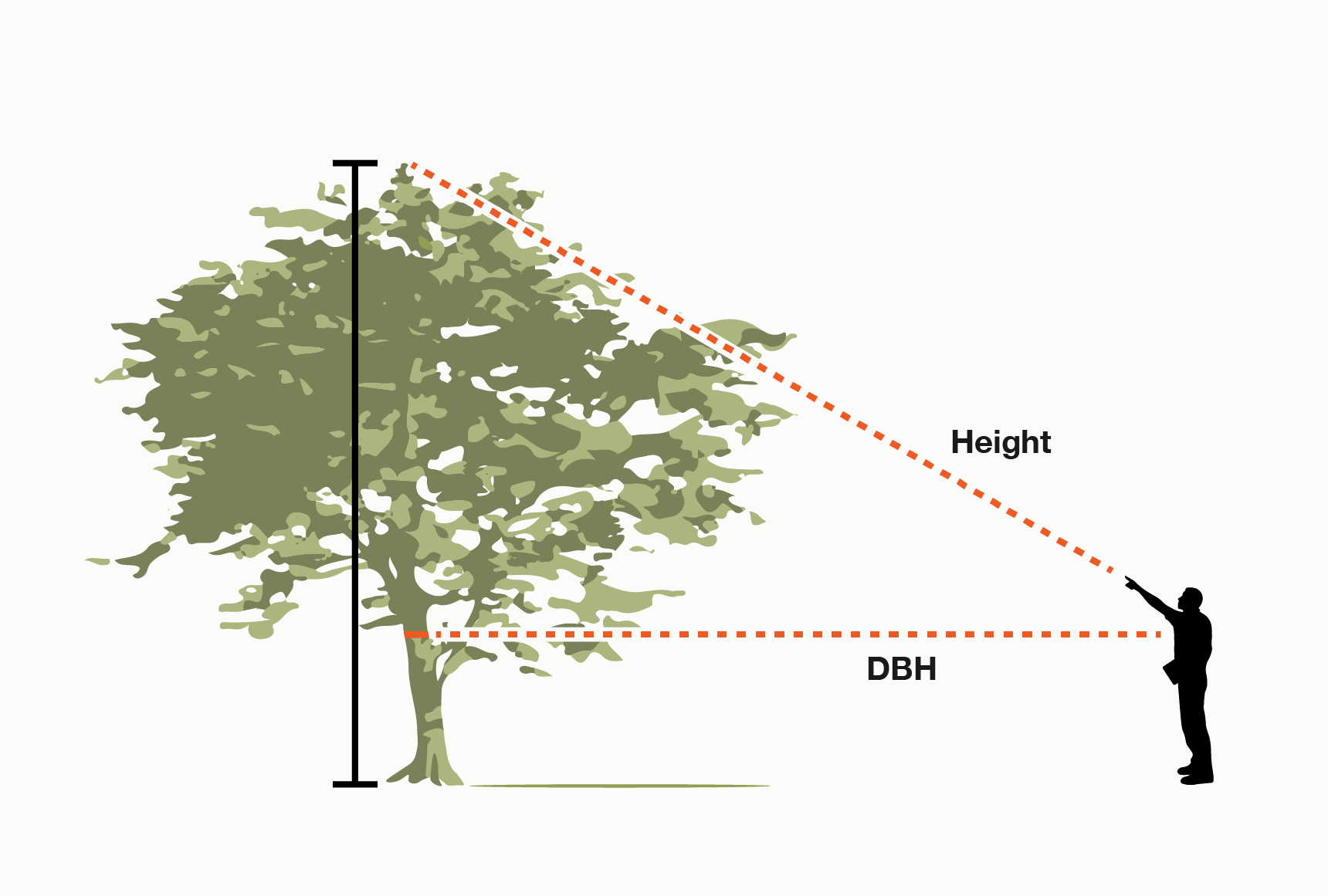
Allometry refers to the study of the relationship between the size or shape of an organism and its various physiological aspects. In the context of carbon storage, allometric equations play a crucial role in estimating the carbon storage potential of trees. These equations use measurable tree dimensions, like diameter at breast height (DBH) or tree height, to estimate AGB (4).

As standard procedure, DBH is measured from 1.3m above ground height (1). This is a simple procedure for a relatively straight tree with one trunk, but with trees of different sizes, growing at varying angles, on slopes or with exposed roots (such as mangroves), DBH measuring techniques are adapted accordingly – this can be seen in the images below.

By applying allometric equations, researchers can quickly assess the carbon storage potential of large, forested areas and guide carbon project planning and implementation. Within allometry, wood density is an important parameter as it is a measure of the dry wood biomass or wood per unit volume, and it varies among species and within trees. These equations typically include wood density as a coefficient, which reflects the fact that denser wood has more biomass per unit volume(1). As an example, the average wood density of Maple trees is 0.547g per cm3 whilst the average wood density of a lighter wood like Spruce is 0.398g per cm3..

https://vfcs.org.vn/wp-content/uploads/2022/04/Guidelines-on-plantation-investigation-for-smallholders.pdf

Techniques for measuring below ground biomass in carbon projects

When it comes to below ground biomass, additional techniques alongside allometric equations like soil coring and radar can provide further estimations of carbon stored below the surface. Soil coring is a method which involves extracting and soil samples that contain roots. It is a direct method, meaning that it involves physically measuring the amount of root biomass present in the soil. Root-to-shoot ratios are parameters that can also be used to estimate BGB in the trees’ root systems, by converting the total aboveground biomass calculated from allometric equations for the tree species. Standardised figures for the ratios can be found under the IPCC guidelines in the 2019 refinement of the 2006 IPCC Guidelines for National Greenhouse Gas Inventories (7). They are based on the regionally specific climactic conditions and associated forest biome classifications.

Destructive sampling involves the felling of several individual trees, of the same species, within different age classes. These trees are then separated according to components (stem, branches, bark, foliage, and roots) and weighed to give you fresh wood biomass. Each component is then dried and re-weighed to ascertain the dry wood biomass (i.e. wood density in g/cm3 or kg/m3). By adding up the total dry weight biomass of each tree component, forest biometricians are able to derive an allometric equation that relates DBH and tree height measurements to the expected AGB. The more destructive samples you have (with a range of diameter classes), the greater your accuracy in estimating AGB when applying the appropriate allometric equation.

Species-specific allometric equations and wood density parameters are indispensable in estimating the AGB of forest ecosystems using field-based surveys. By establishing permanent, fixed sample plots, within a project area, surveyors are able to identify and measure all the trees within smaller plots to estimate the total AGB across the landscape using the relevant allometric equations. Field surveys are also important in evaluating forest health , disturbances and growth rate that can subsequently inform forest management.

The HAMERKOP team taking DBH measurements of trees in Madagascar

Relevant tools and technologies

For ground monitoring and field surveys, allometric equations remain a reliable form of analysis on tree carbon pools. To strengthen understanding of project sites and carbon sequestration however, it is possible to make use of other tools and technology to build on the ground measurements and assess trees from a different vantage point; for example, tools can measure carbon stock by analysing tree canopy cover. Some of these technologies include Infrared Imaging, LiDAR (Light detection and ranging) and SAR (Synthetic aperture radar). With time these are becoming more and more sophisticated and can support assessments of tree canopy cover, forest loss and growth and biomass accumulation.

Conclusion

Forest ecosystems across the world have a remarkable capacity to store carbon in their biomass. The management and conservation of existing forests and the reforestation of degraded lands is a critical component of climate change mitigation. Yet this focus on carbon must not overshadow the indispensable role of forests in maintaining healthy living ecosystems, preserving the ever-threatened biodiversity of flora and fauna which they harbour, and providing humanity with the ecosystem services such as freshwater and clean air, that we often take for granted, and which are not as easily quantified as a tonne of CO2e.

Nonetheless, forest carbon accounting remains an important mechanism that, along with continually improving focus on biodiversity conservation and socio-economic development from the principal carbon certification standards on the voluntary carbon market (VCM), represents a substantial opportunity to mitigate past, current, and future anthropogenic CO2e emissions. By understanding how carbon is stored in forests, and the methods employed to quantify it , we can maximize the effectiveness of reforestation, afforestation and conservation efforts. Accurate measurement of aboveground and below ground biomass, utilizing remote sensing, field surveys, and allometric equations, is vital for estimating carbon storage and guiding future carbon projects. As one of nature’s most effective systems of carbon sequestration and long-term storage, there is immense opportunity, and necessity, to channel much-needed finance to regenerate and manage the conservation of forest ecosystems in a rapidly changing climate. However, to ensure the credibility and accuracy of any forest carbon project, and thus encourage the growth of nature-based projects on the VCM, it is critical for project proponents to develop sophisticated methodologies to quantify the change in forest biomass via ground-based and remote sensing analyses throughout the lifecycle of a project. These must be transparent and reliable.

At HAMERKOP, our work has spanned a multifaceted array of NBS projects that look at REDD+ and ARR efforts that aim to restore ecosystems or create new sources of food and income for local communities. Projects have been in collaboration with local governments of implementing countries as well as the private sector, supporting design, implementation and carbon certification of projects with the relevant standards and methodologies. The team has also been involved in providing field training for project developers implementing ARR projects globally, ensuring accurate measurement techniques and site analyses are being conducted on the ground, and the correct allometric equations and calculations are made from gathered data. More information about our ongoing projects and forestry-related work can be found on our LinkedIn page and the team can also be contacted directly for further insights.

References:

  1. Wood density, phytomass variations within and among trees, and allometric equations in a tropical rainforest of Africa (Henry et al., 2010) https://www.sciencedirect.com/science/article/abs/pii/S037811271000424X

  2. How trees capture and store carbon: https://carbonneutral.com.au/carbon-jargon-how-trees-capture-and-store-carbon/

  3. What is REDD+? https://unfccc.int/topics/land-use/workstreams/redd/what-is-redd?gclid=EAIaIQobChMI9KfX-pDpgwMVtZBQBh3eBw8JEAAYAiAAEgInCPD_BwE

  4. Wood density, phytomass variations within and among trees, and allometric equations in a tropical rainforest of Africa (Réjou-Méchain et al., 2014) Link to article

  5. International Centre for Research is Agroforestry Methods for sampling carbon stocks above and below ground

  6. Carbon sequestration in forests: https://bwsr.state.mn.us/carbon-sequestration-forests

  7. IPCC, 2019 refinement of the 2006 IPCC Guidelines for National Greenhouse Gas Inventories. (2019). Available at: CHAPTER 1 (iges.or.jp)

Hamerkop team
Assessing Carbon Co-Benefit Standards: Unlocking the Value of High-Quality Carbon Projects

https://iscmee.eu-science.com/

It is becoming increasingly clear that climate action must go hand in hand with sustainable development, biodiversity conservation and the empowerment of communities on the frontlines of climate change. This holistic approach is essential to ensure that climate action is effective, sustainable and adaptable to local contexts. Hence, carbon projects should aim not only to avoid negative impacts, but also to generate positive benefits for the environment and local stakeholders. Project co-benefits can include the positive environmental, economic, social, and cultural impacts of a project, and are often linked to the UN Sustainable Development Goals (SDGs), which provide a comprehensive framework for addressing global challenges. 

There are a growing number of certification standards that allow project developers to showcase their contributions to sustainable development. These include carbon standards that directly integrate SDG reporting, such as the Gold Standard and the Verified Carbon Standard (VCS), and stand-alone co-benefits standards, such as the Climate, Community and Biodiversity Standard (CCB) and the Sustainable Development Verified Impact Standard (SD VISta), which can be added on to a VCS certification, or in the case of SD VISta used to generate standalone tradable SDG “assets”.  

The purpose of this blog is twofold: to offer an insightful overview of the primary co-benefit standards for project developers exploring their adoption and to provide clarity for potential buyers of these credits. In doing so, we aim to shed light on the dynamic landscape of co-benefit standards, where climate action converges with broader sustainability objectives. 

Integrated SDG Reporting Under Carbon Standards

Until recently, the Gold Standard was one of the few international voluntary carbon certification standards that required project developers to demonstrate that their project contributed to at least three SDGs. For each project type, SDG Indicators are chosen thanks to the Gold Standard’s proprietary SDG Tool, and any claims made are audited at validation and verification stages. The SDG tool also outlines how each SDG indicator should be quantified and monitored. In addition, the Gold Standard also supports the certification of SDG impacts, such as renewable energy certificate labels, water benefits certificate, gender equality impacts, improved health outcomes, and black carbon reductions. The Gold Standard has developed dedicated methodologies to certify such co-benefits, offering a more comprehensive quantification and monitoring approach. 

However, since January 2023, all newly registered projects under Verra's VCS also need to demonstrate that their projects contribute to at least three sustainable development objectives. The key difference between the two is that while the Gold Standard verifies these claims, the VCS does not necessarily verify the exact results achieved. Instead, auditors will only confirm that the actions leading to the sustainable development contributions have taken place. Alternatively, for more rigorous inclusion and verification of sustainable development goals, SD VISta and CCB certification can be added to a VCS certification to go further and ensure that the sustainable development claims are robust and confirmed by an independent third party. 

Sustainable Development Verified Impact Standard (SD VISta) 

SD VISta was launched in early 2019, and as of November 2023 counts 35+ registered projects. It enables project developers to make claims about the sustainable development contributions of their projects and add labels to VCS-issued carbon credits, but also generate tradable assets, representing a unit of a specific sustainable development benefit. While project developers are free to use their own methodology to monitor and quantify sustainable development claims, they must use an SD VISta approved methodology to generate tradable SDG assets. It must be noted that these assets are not to be used for offsetting purposes.  

As of November 2023, there is only one approved SD VISta methodology, which allows developers to generate time savings units from the use of improved cookstoves. This would specifically target SDGs 5.4 and 8.4. Furthermore, the SD VISta programme is currently in the process of developing a biodiversity methodology, called the: “Nature Framework”, which will enable project developers to generate Nature Credits.  

Nature credits, corresponding to an enhancement of biodiversity in a given area, would help fund projects in ecologically unique but threatened areas to promote ecological conservation and prevent species loss. This new initiative responds to the growing need and demand for biodiversity conservation, particularly in line with the objectives of the Kunming-Montreal Global Biodiversity Framework. More details on this new framework and pilot projects will be released soon.  

On the whole, the SD VISta programme goes much further than a standalone VCS certification by employing third-party expert auditors to rigorously assess a project's contributions to global Sustainable Development. This impartial verification process ensures the reliability of claims regarding the social and environmental benefits generated by these projects. As a result, buyers of SD VISta-labelled carbon credits have additional assurances that a project’s sustainable development claims are not inflated, and project benefits have really materialised. 

Climate, Community, and Biodiversity Standard (CCB) 

The CCB standard is geared specifically at land-based carbon projects, that simultaneously address climate change, support local communities and/or smallholders, and conserve biodiversity. As of November 2023, it has over 75 verified projects and an additional 50 projects that are at validation stage. 

Table 1. How different standards approach sustainable development contributions

The standard is used to generate CCB labels, which can be added to VCUs, but, unlike SD VISta, it does not offer a path for the certification of biodiversity “assets.” CCB awards “Gold Level” for projects that achieve certain criteria in either of the three categories (climate, communities, and biodiversity). For climate gold, projects must demonstrate net positive impacts for climate adaptation; for community gold, projects must be either led by smallholders or explicitly benefit globally poor or vulnerable communities; and for biodiversity gold, projects must protect or enhance Key Biodiversity Areas. 

As under the SD VISta programme, any claims made by project developers are rigorously verified and assessed by expert third-party auditors. Examples of requirements under the CCB include thoroughly assessing baseline conditions for both local communities, and biodiversity in the project area, and how these might be expected to evolve under both the baseline scenario and project scenario. This process involves mapping any key biodiversity areas and High Conservation Values present in the project area, and developing a theory of change, in conjunction with local communities. 

Why Should Project Developers Pursue such Certification?

Recognising the growing importance of these co-benefits, buyers are increasingly looking for credits that deliver verified positive impacts on sustainable development and biodiversity beyond carbon reduction or removal. An ICROA study of 59 carbon projects found that each tonne of CO2e reduced or sequestered can generate up to $664 in additional economic, social and environmental benefits beyond climate change mitigation. For example, in addition to reducing deforestation and forest degradation, cookstove projects tend to improve the health of their beneficiaries and reduce the time spent collecting and buying firewood, which has a positive impact on women and children who often bear the burden of cooking and collecting firewood. 

Efficient monitoring and subsequent monetisation of such co-benefits would enable additional financial flows to be directed towards achieving sustainable development goals globally. In addition, there is evidence that carbon credits with verified and well-documented co-benefits, such as Gold Standard credits or credits with a CCB or SD VISta label, sell at a premium. Based on a recent analysis of over 20,000 projects by Trove Research, credits from projects that deliver broader societal benefits commanded a significant price premium of between 15 - 40%, depending on the standard. The SDGs that attracted the largest price premiums were SDG 4 (education) and SDG 10 (reducing inequalities). On the other hand, as the first SD VISta asset methodology has only recently been approved, no projects have yet issued tradable SDG assets, making the demand for such products and the prices at which they would sell more difficult to predict. 

Beyond buyer preferences, it is likely that regulatory pressure and key voluntary carbon market (VCM) integrity initiatives will eventually require (or at least strongly encourage) project developers to design projects that contribute to sustainable development and environmental co-benefits. The Integrity Council for the Voluntary Carbon Market's (IC-VCM) Core Carbon Principles state that carbon projects must deliver positive sustainable development impacts and that there must be strong environmental and social safeguards in place.  

Possible Challenges 

However, monitoring and quantifying the co-benefits of carbon projects is not straightforward. Although some standards, such as the Gold Standard, provide indicators that can be monitored and quantified for any type of project, this is not the case for all standards. SD VISta and CCB do not require project developers to use a specific methodology, but they do require that the chosen methodology is justified and clearly described. This means that impacts may be calculated in different ways, thereby making comparisons between projects difficult.  

However, it is important to strike a balance between flexibility and standardisation, such as CCB's creation of 'Gold' levels, which projects can only achieve if they meet certain criteria. This approach aims to accommodate different project types with different objectives and contexts, while providing a benchmark for excellence under the programme. 

Similarly, SD VISta and CCB both allow project developers considerable flexibility in choosing the scope and quantity of impacts to report and the indicators to monitor. This is essential to ensure that the standard is suited to a wide variety of project types with different objectives and contexts. As a result, potential buyers must carry out a throughout analysis of the project, to ensure that the co-benefits brought about by the project align with their preferences or requirements.  

Another challenge for project developers is the lack of a clear price premium for attaining these additional co-benefit certifications. However, the advent of Integrity Council for the VCM’s "Core Carbon Principles" is likely to increase demand for high quality carbon credits, thereby sending a stronger price signal to project developers that such certification is worth the additional cost of pursuing it. 

Conclusion 

At a time when climate action is inextricably linked to sustainable development, biodiversity conservation and community empowerment, the value of high-quality carbon projects cannot be understated. As the demand for verified positive sustainable development impacts continues to grow, project developers and buyers should consider the benefits of these co-benefit certifications. Not only do they open doors to additional financial flows, but they also respond to increasing buyer interest for socially and environmentally beneficial carbon projects. 

At HAMERKOP, we understand the importance of high-quality carbon projects that significantly improve the well-being of local communities and ecosystems. Our expertise in carbon markets and sustainable development enables us to provide valuable guidance to project developers and buyers alike. We can help you choose the right certification standard, monitor and quantify co-benefits, and ensure that your claims are rigorously verified by independent third parties. Contact us for more information. 

Hamerkop team
The Ever-Expanding World of Carbon Certification Standards


Approximately 10 years ago, World Bank analysts predicted that by 2025 or 2030 regional carbon markets would merge into a large single and global market. This prediction was formulated in the context of compliance carbon markets forming up at the time in Europe, North America, Australia and elsewhere. 

While this has not materialised, and the compliance carbon markets are still operating at national or regional levels, the voluntary carbon market (VCM) is not growing any simpler.  

Although the VCM is more global, in its impact and dynamics, the increasing number of carbon certification schemes, has made it more complex. 

As explained in our carbon finance handbook, the role of most carbon certification standards is to perform three fundamental functions: 

  • Develop, approve, and update rules, principles, and requirements defining the conditions under which carbon credits can be delivered. 

  • Review carbon offset projects against these rules, principles and requirements. 

  • Operate a registry system that issues, transfers, and retires carbon credits. 

While the VCM had been operating with approximately 6 certification schemes for nearly 15 years (from 1996 to 2010), the recent years have seen the rise of numerous competing standards.  

This can be explained by several factors: 

  • The need for sectorally-specialised schemes offering fewer and more focused tools and methodologies with a range of simplifications, such a unique methodology for all projects and emission reduction tool with pre-populated emission factors. This is notably the case with the Woodland Carbon Code, Moor Futures, and the World Bank’s Forest Carbon Partnership Facility, all established in 2011, and respectively specialised in afforestation, peatland and REDD+ project development, and more recently with the Hemp Carbon Standard and Peatland Protocol in the United Kingdom.  

  • The need for culturally adapted schemes: not everyone can work in English. Domestic or regional schemes can be rendered more accessible when available in the local language (e.g., French, Spanish, Japanese, etc.). This is the case with the French scheme, Label Bas Carbone, set up to support the ecological and energy transition in hard to abate sectors (e.g., agriculture, transportation, forestry), or the J-credits scheme, a Japanese language scheme specifically adapted to the cultural norms of the country.  

  • The need for contextually adapted schemes: domestic or geographically specialised schemes can provide a range of default and locally relevant values that simplify the process of certification and verification. For example, ART TREES, provides a support framework to help nations build domestic REDD programmes. Another context-specific example is the Australian Carbon Credit Unit Scheme (former Emission Reduction Fund) designed to catalyse the transition to net-zero by 2050. 

  • The need for less resource-intensive processes: as the leading schemes grow in complexity to accommodate their stakeholder needs for integrity, this creates room for less sophisticated as well as more innovative schemes. This is notably the case with the Global Carbon Council or CerCarbono, perceived to be simpler copies of the UN’s Clean Development Mechanism and the VCS; or Canada’s CSA, which only requires projects to account for emissions following ISO protocols. 

Considering that 7 new carbon certification schemes have seen the light of day in 2023, as many as the four previous years combined, it is anticipated that the number of standards will keep growing, before eventually consolidating, as was the case with the merger of Gold Standard and CarbonFix, and to so some extent the VCS and Climate Community and Biodiversity standard. 

This first visual shows the 37 schemes run by organisations set up as non-for-profit. 


The most recent trend in the carbon certification landscape is the rise of a new breed of standards: vertically integrated and commercial carbon certifications schemes. 

They are distinct from traditional certification schemes as they have a more commercial approach, led by a business-like setup and often providing a vertically integrated (or end-to-end) approach, including: 

  • setting the rules to issue carbon credits against GHG emission reductions – as traditional schemes do 

  • onboarding mitigation activities without the need for technical third parties – by providing both technical assistance and user-friendly interfaces to do so  

  • approving mitigation activities – as traditional schemes do 

  • issuing carbon credits – as traditional schemes do 

  • and often providing them with a dedicated marketplace or match-making service 

A lot of them apply to small scale, highly replicable activities with more diffuse sources of emissions. These mostly apply to: 

  • Agriculture (e.g., regenerative agriculture and soil carbon) 

  • Engineered and long-term carbon dioxide removal (e.g., enhanced weathering, mineralisation, biochar) 

  • Smallholder tree planting and forest management (e.g., in fragmented landscapes) 

They also have the particularity of making a greater use of technology to: 

  • Monitor impacts (e.g., through LiDAR, satellite imagery) 

  • Come up with new impact concepts (e.g., tonne-year for forest management projects) 

  • Tokenise and facilitate transactions via blockchain 

The number of schemes is likely to grow significantly over the next few years as the market is still nascent… 


With the dozens of carbon certification standards out there it can be hard to understand their varying scopes.  

While they all operate with a slightly different focus, these can be categorised as follow: 

  • Land Use, Land Use Change, and Forestry (incl. agroforestry, land management, ARR) 

  • Conservation & REDD+ (incl. project & jurisdictional) 

  • Carbon Dioxide Removal (incl. engineered carbon removal, biochar) 

  • Industrial GHG emission reduction and energy efficiency 

  • Methane Capture (incl. waste handling and disposal) 

  • Renewable Energy 

  • Domestic Energy Efficiency (incl. cookstoves, efficient lighting, water access, building energy efficiency) 

This visual gathers the 48 schemes identified as currently in operation, in no specific order:


The success and development of each standard is dependent on their level of ambition and their approach to certification, which, in turn, dictates their traction in the marketplace. 

Generally speaking, the older the certification standard, the larger the number of projects they have been able to certify, nevertheless: 

  • Some geographically focused standards (e.g., American standards, etc.) are trailing behind some of the newest standards (e.g., Global Carbon Council) 

  • Some geographically focused standards have gained a lot of traction within a short amount of time (e.g., Label Bas Carbone in France with 575 since 2018) 

  • Some technologically innovative standards are gaining traction and scaling up rapidly (e.g., Universal Carbon Standard – UCR) 

  • A fair number of standards have yet to find scale, even after quite some time (e.g., Plan Vivo, City Forest Credits, CredibleCarbon, NFS) 

A lot of these standards are still in the process of creating a market share for themselves. 

In this visual, we break down the size of certification standards based on the number of projects they have certified/registered:


CONCLUSION  

Through this analysis, we aim to shed some light on the complex world of carbon certification standards at a time where financial sponsors and buyers of carbon credits are looking for clarity and visibility over the quality of their investments and purchases.  

HAMERKOP’s experts have more than a decade of experience working with the carbon market ecosystem, including reviewing and supporting the creation of new certification standards and methodologies and supporting project developers in selecting the right standard for them and designing their climate change mitigation intervention accordingly. If you are looking for support in this space, we can help, reach out to us

This is a highly dynamic space and if you know of a scheme that would fit on these maps, do let us know as we will update this map regularly! 

 
Hamerkop team
Is There Any Room for the Voluntary Carbon Market in the Paris Agreement Era?

As most of you know, we are currently in the era of the Paris Agreement, with a global consensus on how we plan to fight climate change. It was agreed upon in 2015 by the members of the Conference of Parties (COP) to the United Nations Framework Convention on Climate Change (UNFCCC). This marks the beginning of what some call the Paris Agreement Era, whereby almost all countries in the world have committed to taking concrete actions on climate change and reporting their progress to the international community. Countries will attempt to hold each other accountable, and increase ambition over time, while also prioritizing climate adaptation and sustainable development among developing countries. 

One tool for climate action, among many, is voluntary offsetting, whereby companies can offset their own emissions by buying units of emissions reduced elsewhere that have been audited and verified. Each unit, also called “carbon credit”, is equivalent to one tonne of CO2e (a standardised unit of greenhouse gases). This takes place in the Voluntary Carbon Market (VCM) and is a flexible way for companies to achieve their goals on the way to becoming net zero. But how does this fit into the broader context of the Paris Agreement? And what do recent developments of the Paris Agreement (such as Article 6) mean for the voluntary market? This blog post will start to unpack these questions and provide some insight into how this all fits together, and where it may be headed. 

The Voluntary Carbon Market: Where did it come from and why does it exist?  

The concept that entities can voluntarily buy emissions reductions to achieve their own objectives has been around for a while (in fact, the first carbon offsetting project took place in 1989 – an agroforestry project in Guatemala [1]) but became globally recognized in 1997 through the Kyoto Protocol (the first agreement on climate change signed by the majority of the world’s countries). Essentially, a market for the voluntary trade of units of emission reductions was laid out so that industrialized countries could meet their emissions reductions targets by funding projects in developing countries and buying these units of emissions reductions.  

This mechanism, while by no means flawless, allowed investment to flow into climate projects in the Global South while industrialised countries had access to flexibility for more efficient targeting of their emission reductions. The framework for doing this was called the Clean Development Mechanism (CDM), and it allowed countries to use purchased credits towards their national objectives laid out in the Kyoto Protocol. The CDM indirectly gave rise to the Voluntary Carbon Market (VCM), as economic entities, who were not constrained by law to reduce their emissions, started buying credits from the CDM to offset their emissions voluntarily.  

Currently, organisations active in the VCM can buy carbon credits generated from projects that either remove greenhouse gases from the atmosphere (e.g. tree planting) or avoid greenhouse gases from being emitted to the atmosphere (e.g. switching a power source from coal to solar). 

Since it is unregulated, organisations in the VCM have multiple choices when buying carbon credits, all of which are created by following standardized methodologies based in science and are issued by independent certification standards who mandate and conduct audits and other checks. When a buyer purchases and then retires (i.e., “cancels”) a credit, it represents a tonne of carbon already removed from the atmosphere or avoided, and this can balance out the buyer’s own emissions. The VCM is currently valued at $2 billion USD and is predicted to grow by a factor of between 5 and 20 by 2030 [2] as shown in the figure. 

Paris Agreement refresher

When adopted in 2015, the Paris Agreement was hailed as the most ambitious and broadly agreed-upon climate pact to date and marked a turning point in global climate policy with nearly every country signing on. Countries who have signed the Agreement present their targets for emissions reductions in a plan called a Nationally Determined Contribution, also known as an NDC. These are revised every five years, to update progress on their goals and preferably increase ambition by setting even higher targets.  

Financing climate action is an important aspect of the Paris Agreement. Similar to the Kyoto Protocol and its CDM framework, the Paris Agreement sets out rules and guidance for voluntary cooperation to reduce emissions. The Agreement is made up of 29 articles, the 6th of which lays out a framework for voluntary international cooperation. The idea is that flexibility and voluntary emissions reductions can improve efficiencies in reducing emissions, by notably financing the “low hanging fruit” first, while working up to the harder-to-decarbonize sectors. Global cooperation also means that projects needing financing in developing countries can have access to a broader range of financial instruments, which can address both climate and development challenges. So, let’s dig into Article 6! 

What’s all the fuss about Article 6? 

Article 6, which sets the stage for international voluntary cooperation under the Paris Agreement, underwent important developments at COP26 in Glasgow in 2021 and is becoming increasingly relevant to those involved in the VCM. The Article lays out rules for both market (in articles 6.2 and 6.4) and non-market cooperation (in article 6.8). We will focus on the market-based cooperation, as these articles most closely resemble the current VCM and are the most likely to impact it.  

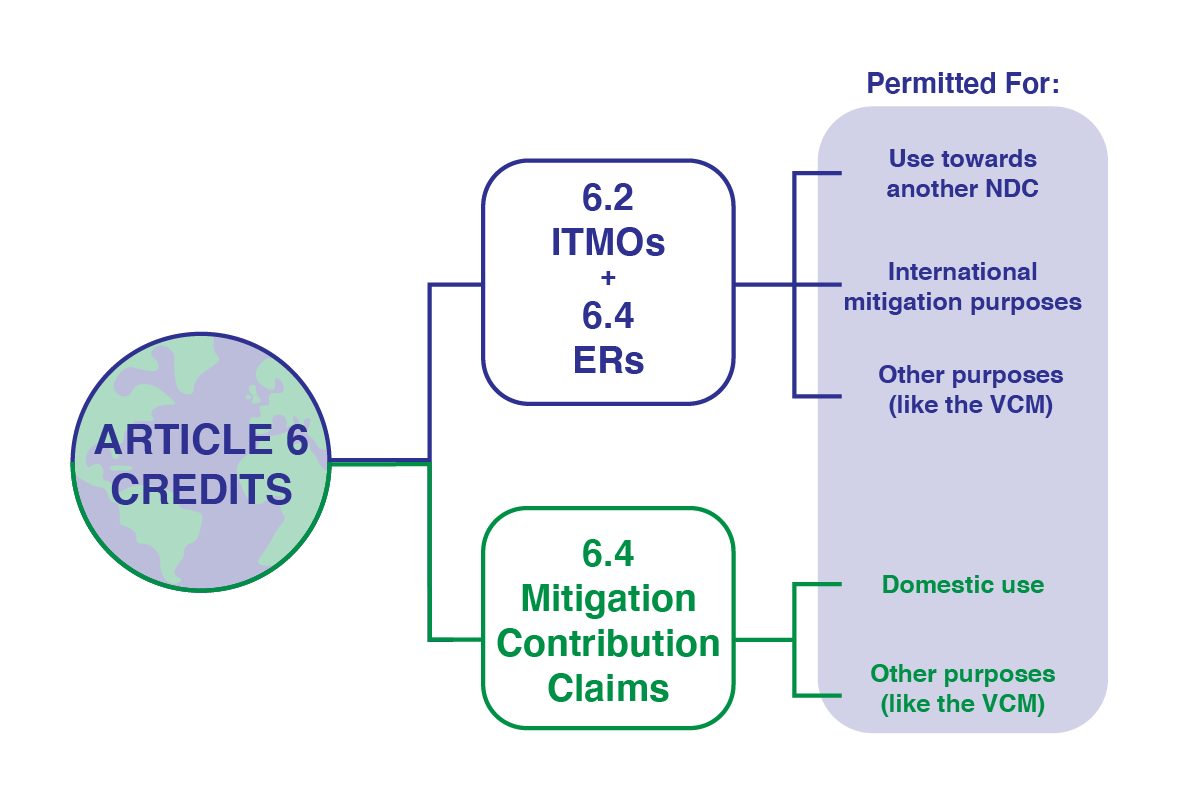
Article 6.2 provides for the trade of ITMOs (Internationally Transferred Mitigation Outcomes), which are similar to carbon credits, but are exchanged on a voluntary basis between a buyer country and a seller country. The idea is that these emissions reductions can be used towards the NDC of the buyer country, but not the NDC of the seller country.  

Article 6.4 establishes a central repository for storing and voluntarily trading carbon credits. It essentially replaces the CDM from the Kyoto Protocol era. This new repository will be governed by the UNFCCC, which will issue credits for emissions reductions and store them in a registry (in the VCM, this is currently done by a selection of non-profit organisations such as the Verra and the Gold Standard). Similar to their rules around ITMOs, a carbon credit traded under Article 6.4 will only be claimable by the buyer country or the host country but not both. This means that the country in which this project is located must deduct this emission reduction from its NDC before selling the credits to the buyer (who can, in turn, claim this emission reduction). 

This process whereby host countries must deduct the emission from their national GHG inventory (to ensure it is not reported to the UNFCCC) is known as a corresponding adjustment, and its goal is to avoid double counting (whereby a single credit is counted by two entities) as illustrated in the figure. 


While corresponding adjustments are yet to be operationalised, individual host countries are deciding whether to also apply or require these for credits issued by the independent certification standards used in the VCM. Similarly, buyers of carbon credits issued by independent certification standards are wondering whether they will be able to continue making offsetting claims without host countries adjusting their inventories. Importantly, unlike under the VCM, the carbon credits issued under Article 6.4 can also be used towards the NDC’s of buyer countries, which would require corresponding adjustments to be made.  

Normally, the VCM is just for voluntary purposes. However, certain compliance schemes such as CORSIA (Carbon Offsetting and Reduction Scheme for International Aviation) allows airlines to use carbon credits indiscriminately issued from a range of certification standards as long as they are associated with a corresponding adjustment. This shows the progressive and increasing relevance of corresponding adjustments for independent certification standards and the VCM.  

How does the Voluntary Carbon Market interact with the Paris Agreement?

Currently, the VCM sits outside of, but in a way alongside, the Paris Agreement. The buyers of credits under the VCM are private enterprises not constrained by law to do so, whereas the buyers of credits under the Paris Agreement will be countries. Moving forward, buyers on the VCM will be able to buy credits issued by independent standards (as now) as well as credits issued under Article 6. However, carbon credits eligible under the Paris Agreement (for countries to meet their NDCs) will only be those issued under Article 6.  

Many countries have compliance markets which mandate emission reductions from carbon intensive sectors by law. However, with broader acknowledgement of the need for climate action, and increased pressure from the public and consumers on the role of private enterprises in contributing to climate change, the VCM is increasingly used for offsetting purposes. Offsetting is a way for companies to contribute to climate action above and beyond reducing emissions within their value chain, and a growing number of companies are offsetting in line with science-based targets in order to achieve “carbon neutrality” or “net zero” status. This is happening in tandem with increased ambition from national governments, as they revise their NDCs and attempt to hold each other accountable on meaningful progress.  

Developments to Article 6.4, namely the structuring and formulation of a centralized credit repository and rules of authorising project activities, could have significant impacts on the VCM. This new market might lead to stricter rules for the VCM and impact its trends and participation. For example, the VCM does not currently require buyers to have corresponding adjustments for the credits they use. The idea here is that corresponding adjustments are not required if a credit is reported once at the international level (to the UNFCCC through a country’s NDC reporting) and once at the company level (on the carbon footprint of a private enterprise, for example).  

Another reason for the lack of corresponding adjustments in the VCM is the fear that they could act as operational barriers for low-income countries to access funding for climate projects (by requiring authorisations from national government, who may be reluctant to do so, and prevent them from accounting emission reductions as part of their mitigation targets) and therefore impede the channelling of private finance into developing countries with limited financial options for their projects.  

However, the current lack of requirement for corresponding adjustments in the VCM might not be here to stay. Under Article 6.4, if a corresponding adjustment is not made, the emissions reduction is relabelled as a “mitigation contribution” and these cannot be used for offsetting purposes. There remain questions as to whether this distinction and its implications for offsetting could send signals to the VCM (for example, by impacting buyer preferences).  

As countries set their domestic rules to govern the use of Article 6, they are increasingly regulating projects certified to independent certification standards as well. These could have significant implications for project developers and buyers of the VCM.  

Evidence shows that allowing for access to voluntary, cooperative approaches for reducing emissions can in fact increase ambition for meaningful climate action [3]. However, recent concerns on the integrity and transparency of some carbon projects as well as accusations of greenwashing in how companies communicate these, can erode trust in the VCM. 

For the VCM to align with the goals of the Paris Agreement, transparency and integrity need to be prioritised. A range of initiatives and organisations have been promoting good practices, including the Voluntary Carbon Market Initiative (VCMI), the Integrity Council for the Voluntary Carbon Market (ICVCM), and the University of Oxford (with their Oxford Principles for Net Zero Aligned Carbon Offsetting). 

Where this is all headed: what you need to know

As this develops, and the norms and institutions evolve, different actors in the climate space will adapt to these changes in diverse ways. Countries in which carbon projects take place (i.e. host countries) are currently strategizing on how to best engage with the VCM while still achieving their NDCs. The decision of whether to authorize emissions reductions to be exported and used under, say, Article 6 could present a trade-off as they could no longer be applied towards their NDC. There are several initiatives attempting to support host countries to build capacity and strategize, such as the A6 Implementation Partnership and the Supporting Preparedness for Article 6 Cooperation (SPAR6C), among others. 

Key players in the VCM may need to adapt to changes and trends in this space, and we can in fact already see this happening. Project developers and investors are similarly watching the development of Article 6, to see the impacts it may have on the VCM and the viability of certain types of projects in certain regions. Two of the principal VCM standards, VCS and the Gold Standard, have begun elaborating their positionings on Article 6 and its implications. Both standards have begun developing special labels for credits that have been authorized by host countries to have corresponding adjustments (and therefore engage with Article 6). Voluntary buyers of carbon credits will also be affected by developments in this space, and some may even be asking whether the VCM warrants continuation with an increasingly ambitious Paris Agreement. However, recent research shows that private enterprises who voluntarily purchase carbon offsets are also those who have taken the most action on reducing their own emissions before engaging in offsetting of residual (i.e., leftover) emissions [4,5].  

If we are to achieve the goals of the Paris Agreement, we must understand the interactions between the VCM and these goals. A global understanding of the importance of putting a price on carbon as well as the urgent need to rapidly and drastically reduce carbon emissions are the backdrop to this understanding. We hope this blog post has helped build your understanding of the VCM in the Paris Agreement Era and where this may be heading in the future.  

HAMERKOP supports project developers and international development organisations with technical and strategic assistance. If you want support understanding or engaging in the VCM and Article 6, feel free to get in touch.  


References:

  1. Valentin Bellassen, B. Leguet. The emergence of voluntary carbon offsetting. [Technical Report] 11, auto-saisine. 2007, 36 p. ffhal-01190163f 

  2. The voluntary carbon market: 2022 insights and trends: A report by Shell and BCG. 2023. https://www.shell.com/shellenergy/othersolutions/carbonmarketreports.html#vanity-aHR0cHM6Ly93d3cuc2hlbGwuY29tL2NhcmJvbm1hcmtldHJlcG9ydHMuaHRtbA  

  3. The Economic Potential of Article 6 of the Paris Agreement and Implementation Challenges, IETA, University of Maryland and CPLC. Washington, D.C. License: Creative Commons Attribution CC BY 3.0 IGO. 

  4. Corporate emission performance and the use of carbon credits. Trove Research (2023). https://trove-research.com/report/corporate-emission-performance-and-the-use-of-carbon-credits/  

  5. Carbon Credits: Permission to Pollute, or Pivotal for Progress? Sylvera (2023). https://www.sylvera.com/resources/carbon-credits-and-decarbonization  

 
Hamerkop team
How can companies incorporate carbon removals and reductions in rigorous Net Zero strategies?

Over the past couple of years, the number of companies committing to net-zero has dramatically increased. Currently, over 5,200 businesses have committed to or set a Net Zero target as part of the UNFCCC’s “Race to Zero” campaign [1]. Furthermore, about 750 of the 2,000 largest publicly listed companies have committed to some form of net zero or climate neutrality target. However, the integrity and breadth of these commitments vary widely with regard to timelines, types of greenhouse gases (GHG) covered, and scopes included in their target.  

This discrepancy reflects the fact that the term “Net Zero” is still a poorly understood concept by many and it is even less well implemented in corporate strategies. A particular area of contention rests on the use of offsets, either in the form of carbon removals or reductions, and the role they should play in corporate climate commitments. In the paragraphs that follow, we aim to shed light on what a science-based Net Zero strategy that includes the purchase of offsets should take into consideration. 

The Net Zero landscape

Companies on the road to developing their Net Zero strategies will find themselves in no short supply of guidance to use. For now, the best practice when setting targets is to use the “Net Zero Standard” by the Science Based Targets initiative (SBTi). Another useful resource is Carbone 4’s “Net Zero Initiative”. In addition to providing guidance on SBT setting, SBTi also independently assesses and approves organizations’ targets. Carbone 4’s framework details different actions that can be taken both inside and outside a company’s value chain across the following three pillars: reducing the company’s own emissions, reducing other’s emissions, and removing CO2 from the atmosphere [2]. While their guidance is consistent with each other, Carbone 4 does not allow for a company to claim “Net Zero” status, but rather to communicate about its contribution to the targets of the national territory it is located in. 

On the role of offsetting in rigorous climate strategies, a useful resource companies can use is the Oxford Principles for Net-Zero Aligned Carbon Offsetting. These outline four principles that if adhered to can have a credible climate impact, as opposed to greenwashing [3]. These are: 

  1. Prioritise reducing your own emissions first, ensure the environmental integrity of any offsets used, and disclose how offsets are used 

  2. Shift offsetting towards carbon removal, where offsets directly remove carbon from the atmosphere 

  3. Shift offsetting towards long-lived storage, which removes carbon from the atmosphere permanently or almost permanently 

  4. Support for the development of a market for net-zero aligned offsets 

In addition to this, there are also various networks and alliances that work to ensure the integrity of the voluntary carbon market. 

On the supply-side, the Integrity Council for the Voluntary Carbon Market (IC-VCM) has recently published the “Core Carbon Principles” which aims to set a robust benchmark for companies to identify credible, high-integrity carbon credits, that create high environmental and social value. 

On the demand-side, the Voluntary Carbon Markets Integrity Initiative’s (VCMI) ambition is to set the standard for high integrity use of carbon credits in organisations’ climate strategies. Their Provisional Claims Code of Practice outlines clear guidance on how companies can make transparent and credible claims regarding offsetting and provides a framework for rating companies’ efforts on three levels: Gold, Silver, and Bronze. 

Both are designed to be used in tandem with SBTi’s Net Zero Standard. 

What is the meaning of Net Zero?

“Net Zero”, “carbon neutral”, and “climate neutral” are just a couple of examples of seemingly synonymous climate jargon, used by companies to characterise their climate efforts. While they are often used interchangeably, there are subtle differences between them, mainly relating to the coverage of different greenhouse gases, timelines and scale of emissions reductions required, the requirement for targets to be science-based, and most significantly, the role of offsetting and type of offsets allowed.

While Net Zero requires companies to drastically reduce emissions within their value chain in line with science, climate or carbon neutral can mean that emissions are balanced out by offsets. As a result, Net Zero is only achieved once long-term emission reduction goals are met and residual emissions neutralised, whereas climate neutrality can be claimed by any entity that has fully offset their emissions in a given year. However, the current lack of standardised definitions and oversight bodies means that companies will ultimately be able to do what they want – at the risk of being called out for greenwashing. 

A source of confusion is the definition of Net Zero itself. The IPCC defines a state of Net Zero emissions as: “when anthropogenic emissions of greenhouse gases to the atmosphere are balanced by anthropogenic removals over a specified period” [4]. Whilst this definition applies to the planet as a whole, some claim it does not hold at an individual company level. For this reason, Carbone 4 maintains that organisations can only contribute to global climate targets but cannot achieve a final state of Net Zero. 

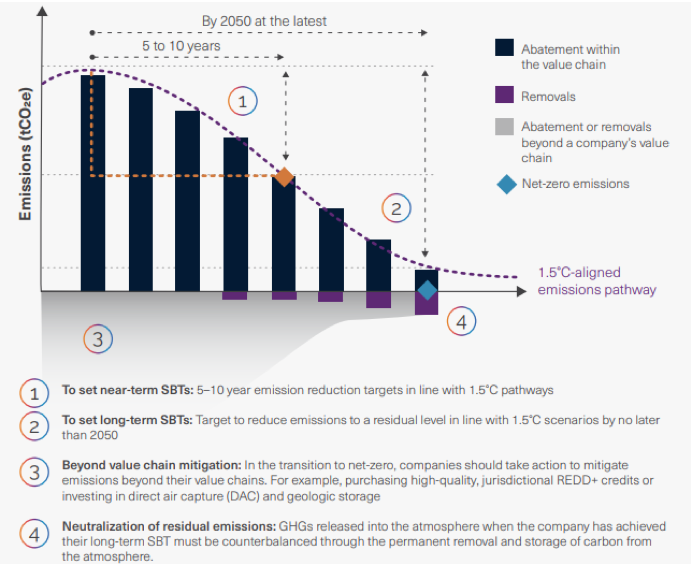
Figure 1: Elements of the Net Zero Standard [5]

While there is currently no universally agreed upon definition of a Net Zero strategy, under the SBTi’s guidance, to determine their baseline emissions, companies must undertake a comprehensive GHG inventory that covers at least 95% of their scope 1 and 2 emissions and a complete scope 3 screening, usually using the GHG Protocol guidance. From this, they must set both near-term and long-term emission reduction targets. Long-term targets must be achieved by 2050 latest, whereas near-term targets must be achieved 5-10 years after having committed to net zero, typically around 2030. 

For targets relating to scopes 1 (direct emissions), 2 (indirect from heat and electricity), and 3 (indirect emissions) employing the absolute contraction method, the long-term target should represent an emissions reduction of 90% relative to the baseline year. The baseline year can be chosen by the companies themselves, provided that they have enough information on Scope 1, 2 and 3 emissions for that year, that it is representative of the company’s typical GHG profile and can be no earlier than 2015. For scope 3 targets employing the physical intensity contraction method, the reductions should represent 97% of the baseline.

After reaching their long-term emissions reduction targets, companies must neutralise their residual emissions, using removals only, to ensure that any GHG still emitted by company are counterbalanced. Residual emissions, which refer to the hard-to-abate GHG emissions remaining after the achievement of a long-term Net-Zero target, must not represent more than 10% of the company’s baseline emissions. 

How can carbon offsetting be incorporated?

The crucial point in all this is that carbon credits, whether removals or avoided emissions, cannot count towards the achievement of any emissions reduction target. Removal credits can only be used to neutralise residual emissions, but the rest of the way must be executed through a comprehensive emission abatement plan. 

Therefore, the IPCC’s definition, where net zero emissions is defined as a balancing act between total emissions and total removals, may not be appropriate to be applied at the corporate level. 

Instead, companies can purchase carbon removals or reductions credits to neutralise emissions on their way to achieving their Net Zero target. This is also referred to as beyond the value chain mitigation (BVCM). Doing so is also a requirement of the VCMI Claims Code of Practice. In this way, achieving climate neutrality can be seen as an interim measure on the path to achieving a long-term science-based Net Zero target. 

Whichever offsetting strategy entities choose must be clearly detailed in their climate plan, including whether there are any conditions on their use. For example, some companies chose to only purchase removals, whereas others purchase both removals and avoided emission credits. Other conditions can relate to the additionality, permanence, verifiability, or other environmental or social co-benefits certain offsets may offer [6].

How to recognise credible offsets

One issue is that the onus is on the company itself to do research and find out what carbon offsets could be considered credible, yet only a few have the resources and skills to do this. What follows is that a number of purchased credits do not comply with strict integrity requirements. The most fundamental ones include: 

  • Environmental integrity: Ensuring the use of the credits does not lead to an increase in global emissions [7]. What this refers to is the fact that emissions reductions should not be overestimated, be based on a conservative baseline, and take into account possible leakage. 

  • Additionality: Establishing that the GHG emissions reductions or removals resulting from the mitigation activity would not have occurred in the absence of this project. Often this relies on demonstrating the project’s reliance on carbon revenues or that it does not fall under a host country’s climate commitment [8]. 

  • Permanence: Making sure that GHG reductions or removals are permanent and have a low risk of reversal, with any reversals being compensated. For agriculture, forestry and other land-use projects (AFOLU), which have a higher risk of reversal due to climatic conditions, wildfires, or deforestation, a percentage of credits are set aside in a buffer to compensate for any losses.  

  • No double counting: Making certain that each credit only counts towards the achievement of one mitigation target or goal. In the context of Article 6 of the Paris Agreement, host countries are required to make corresponding adjustments if a mitigation outcome is being transferred internationally to meet a compliance target [9]. Whilst such adjustments will not be required for the voluntary carbon market unless purchasing credits authorised for Article 6, this will likely affect the voluntary carbon market in some way. 

  • Avoiding social and environmental harms: Safeguards must be in place to ensure that the project does not contribute to any social or environmental harms, and respects laws and regulations. Certification standards such as the Climate, Community, and Biodiversity Standard (CCB) or programs to quantify sustainable development impacts such as the Gold Standard or the Sustainable Development Verified Impact Standard can offer additional safeguards that such harms are being avoided. It is however best practice to carry out due diligence of purchased credits regardless of the certification standard. 

Different types of reductions and removals

A family in Sudan with a collection of firewood for cooking for 4 days. Photo by HAMERKOP.

GHG reduction credits represent avoided emissions resulting from decreasing the emissions intensity of a certain process. Reductions are calculated according to how the with-project emissions scenario compares to the hypothetical without-project scenario. For example, renewable energy projects reduce emissions by displacing fossil fuel electricity production. Furthermore, cookstoves projects reduce emissions by reducing demand for firewood as a cooking fuel and hence avoiding deforestation, as well as reducing black carbon emissions, a powerful radiative forcing. Further information about HAMERKOP’s expertise in energy access and clean cooking can be found here

While investing in GHG reductions is an important tool in avoiding future emissions to pile up in the atmosphere, over time investment in permanent removals should also be scaled up substantially, to address past emissions. As explained above, to reach a state of Net Zero, residual emissions, which represent less than 10% of baseline emissions, can only be neutralised by removals. 

Carbon Dioxide Removals (CDR) include biological or technological methods of sucking carbon dioxide out of the atmosphere and permanently storing them. 

Currently, the most mature options at scale for carbon removals are Nature Based Solutions (NBS). These include tree planting and ecosystem restoration such as peatlands, mangroves, and seagrass meadows. At present, plants and soils in terrestrial ecosystems absorb the equivalent of around 20% of anthropogenic GHG emissions and are thus a key player in achieving Net Zero [10]. 

Figure 2: Estimated costs and 2050 potentials of CDR [13]

On the other hand, technological carbon removals are still unproven at scale but likely to play a measurable role [11]. Such engineered solutions to remove carbon from the atmosphere include carbon capture and storage (CCS), direct air capture (DAC), biochar, and enhanced weathering. Yet considerable investment is required to make these technologies have an impact on global mitigation. For instance, the largest DAC and storage plant running today only sequester about 4,000 tonnes CO2e per year, which approximately amounts to the yearly emissions of 870 cars [12]. 

A challenge for NBS removals is how to guarantee the permanence of removals given their vulnerability to a range of natural and human disturbances such as wildfires and deforestation.  

Currently, under the major carbon certification standards, all Agriculture, Forestry and Other Land Use (AFOLU) projects undergo a non-permanence risk assessment to qualify the risk that a given tonne of GHG removed will be reversed in the next 100 years. Geological forms of storage, which includes many of the engineered carbon removal solutions, are much less vulnerable to reversal and are likely to be guaranteed for 1,000+ years. For this reason, it is important to also invest in longer-term more permanent forms of storage. 

The major barrier to investing in technological carbon removals is their price, which also reflects the lack of maturity of their technology. In 2021, forestry and land use removals credits traded at around US$7.90 per tonne [14]. Today they sell for US$10-20. By contrast, the price per tonne of technological carbon removals can be US$200-600 [15]. 

The Frontier fund, set up by Shopify, Microsoft, Stripe, and others, aims to overcome this barrier by providing an advanced market commitment of $925 million for carbon removal technologies. Such actions send a powerful market signal and boost innovation and the development of such technologies by guaranteeing demand for them and bringing down their cost in the long run. 

Conclusion

This article has intended to highlight that using carbon removal or avoided emission / reductions offsets can have a positive climate impact, so long as it takes place within a credible and ambitious Net Zero plan or strategy. 

If companies choose to incorporate offsetting as part of their Net Zero strategy, it is important that they report on their purchases in a transparent way, set conditions for their use, and use best practice guidance to identify credible and high-integrity offsets. While investing in reductions is crucial in the long term, gradually scaling up investment in removals is instrumental to reaching the goals of the Paris Agreement. 

HAMERKOP’s experts have more than a decade of experience supporting project developers, designing climate change mitigation interventions, carrying out technical feasibility studies and getting projects through the certification process to issue carbon assets.  

Whether you are a company looking for guidance on how to integrate best quality carbon offsets, financially support long-term and impactful climate change mitigation intervention, or assess the quality of carbon offsets you intend to support, we can help – reach out to us. 

References:

[1] UNFCCC, "Race To Zero Campaign", Unfccc.Int https://unfccc.int/climate-action/race-to-zero-campaign#eq-3 [Accessed 26 August 2022].

[2] Maxime Aboukrat and others, Net Zero Initiative 2020-2021 Final Report (Carbone 4, 2021) https://www.carbone4.com/files/Net_Zero_Initiative_Final_Report_2021_2021.pdf

[3] Myles Allen and others, "The Oxford Principles For Net Zero Aligned Carbon Offsetting", University Of Oxford, 2020 https://www.smithschool.ox.ac.uk/sites/default/files/2022-01/Oxford-Offsetting-Principles-2020.pdf

[4] IPCC, "Annex I: Glossary", in Global Warming Of 1.5˚C. An IPCC Special Report on the Impacts of Global Warming of 1.5˚C Above Pre-Industrial Levels and Related Global Greenhouse Gas Emission Pathways, in the Context of Strengthening the Global Response to the Threat of Climate Change, Sustainable Development, and Efforts to Eradicate Poverty (Cambridge: Cambridge University Press, 2018).

[5] SBTi, "SBTi Corporate Net-Zero Standard", Science Based Targets Initiative, 2021 https://sciencebasedtargets.org/resources/files/Net-Zero-Standard.pdf

[6] Kaya Axelsson, Aoife Brophy and Elena Pierard Manzano, "Net Zero Business or Business for Net Zero? A Report on Corporate Climate Leadership Practices on Scope and Offsetting", Skoll Centre For Social Entrepreneurship & Oxford Net Zero, 2022 https://netzeroclimate.org/wp-content/uploads/2022/02/Net-zero-business-or-business-for-net-zero.pdf

[7] Lambert Schneider and Stephanie La Hoz Theuer, "Environmental Integrity of International Carbon Market Mechanisms Under the Paris Agreement", Climate Policy, 19.3 (2019) https://doi.org/10.1080/14693062.2018.1521332

[8] Lambert Schneider and others, "What Makes a High-Quality Carbon Credit?", WWF, EDF & Öko-Institut, 2020 https://files.worldwildlife.org/wwfcmsprod/files/Publication/file/54su0gjupo_What_Makes_a_High_quality_Carbon_Credit.pdf?_ga=2.218034974.983871514.1660815690-932968438.1660815690

[9] Trove Research, "VCM And Article 6 Interaction Discussion Paper On The Use Of Corresponding Adjustments For Voluntary Carbon Credit Transfers", 2021 https://globalcarbonoffsets.com/wp-content/uploads/2021/01/VCM-and-Article-6-interaction-6-Jan-2021-1.pdf

[10] Bronson W. Griscom and others, "Natural Climate Solutions", Proceedings of the National Academy of Sciences, 114.44 (2017) https://doi.org/10.1073/pnas.1710465114

[11] Robert Höglund, "The Carbon Removal Market Doesn't Exist", Illuminem.Com, 2022 https://illuminem.com/illuminemvoices/dd812162-ba25-4321-95dd-2b0208bc489b [Accessed 19 August 2022].

[12] Katie Lebling and others, "6 Things To Know About Direct Air Capture", World Resources Institute, 2022 https://www.wri.org/insights/direct-air-capture-resource-considerations-and-costs-carbon-removal [Accessed 23 August 2022].

[13] IPCC, "Chapter 4: Strengthening and Implementing the Global Response", in: Global Warming of 1.5°C. An IPCC Special Report on the Impacts of Global Warming of 1.5°C Above Pre-Industrial Levels and Related Global Greenhouse Gas Emission Pathways, in the Context of Strengthening the Global Response to the threat of Climate Change, Sustainable Development, and Efforts to Eradicate Poverty (Cambridge: Cambridge University Press, 2018) https://www.ipcc.ch/site/assets/uploads/sites/2/2022/06/SR15_Chapter_4_LR.pdf

[14] Stephen Donofrio and others, The Art of Integrity State of the Voluntary Carbon Markets 2022 Q3 (Ecosystem Marketplace, 2021).

[15] cdr.fyi, "Compilation of Known CDR Purchases", Cdr.Fyi, 2022 https://www.cdr.fyi/ [Accessed 19 August 2022].

Hamerkop team
10 years of REDD+! An outlook on the performance of the world’s REDD+ projects
 

The aim of REDD+ projects (short for Reducing Emissions from Deforestation and Forest Degradation) is to address one of the primary drivers of climate change by working to protect key areas of forest and wildlife from deforestation. Yet what sets REDD+ apart from similar climate mitigation projects is the focus on providing important co-benefits for surrounding populations including improved infrastructure, employment opportunities, and other community development projects. 

As we pass the 10-year mark of active, credit-issuing REDD+ projects, HAMERKOP has collected and analysed data from active projects certified to the Verified Carbon Standard (VCS), the largest “voluntary” carbon credit certification organisation, to assess project prevalence and effectiveness across 6 key metrics

All the projects reviewed had completed at least one monitoring cycle. The completion of the first monitoring cycle marks an important milestone in the certification process whereby the project is able to issue carbon credits for greenhouse gas emissions reduced or avoided. The data analysis performed omits projects that are in development but have not yet issued any carbon credits.  


1. Monitoring Period Length  

A monitoring period corresponds to the passage of time during which project developers record their project impacts before they undergo a verification audit. Successful completion of this leads to the issuance of carbon credits for the corresponding monitoring period. With most carbon certification standards, project developers are free to choose how often they want to materialise and monetise their project’s performance. 

REDD+ projects are complex to implement and monitor and this partly explains the reason project developers tend to have longer monitoring period than for other project types. The monitoring periods of VCS-issued REDD+ projects range from one to ten years long, with an average period of 3.25 years (39.4 months). 

The first monitoring period is often the longest, since a broad range project implementation and certification processes need to be set in place.  

The Ecomapua Amazon REDD+ Project [1] in Brazil, the first REDD+ project by activity history, began monitoring its performance in 2003. However, most REDD+ project start dates are concentrated within a nine-year period between 2008 and 2016 (inclusive). The first REDD+ project to issue credits, however, was the Kasigau Corridor Project [2] in Kenya, which, in addition to preventing deforestation, works towards sustainably resolving local human-wildlife conflicts that have been prevalent in the area in the past. 


2. Geographical Scope  


In the decade since the Kasigau project issued its first credits in 2011, the field has exploded to 55 projects that are currently issuing carbon credits. These projects are dispersed throughout the developing world.  

Among those already issuing credits, all except 5 projects are located in South America or Africa. In South America, they are concentrated in Brazil and Colombia, with a few additional projects in Peru. While Peru and Colombia have enabling environments, the case of Brazil is more contrasted and complex. African projects, by contrast, are spread more evenly throughout the continent.  


3. Project Size

The size of a project can impact the ability to deploy activities to counteract deforestation and forest degradation. The size of REDD+ projects that have issued credits range from just 18,000 ha (e.g., the Amazon Rio REDD+ IFM [3]) to over 1 million ha (e.g., the REDD+ Project Resguardo Indígena Unificado Selva de Matavén [4] in Colombia and the Cordillera Azul National Park REDD project [5] in Peru). 

Projects were categorised as small (under 100,000 ha), medium (100,000 ha to 500,000 ha), and large (500,000 ha and over). There are significantly more small and medium projects than large ones. It can be challenging in many countries to find areas that can be aggregated and managed under a single project entity and where the agents of deforestation and degradation can be addressed effectively. The figure to the left gives a more detailed breakdown of project sizes.  

Furthermore, the figure to the right shows the relationship between project area and their resulting emission reductions. Project performance here is based on the total emission reductions included in monitoring reports thus far, measured in tCO2e reduced/avoided per hectare and per year. The results suggest that mid-sized projects have the largest variety in performance. The emissions reduction performance of small and large projects, by contrast, vary less. Note, that the analysis does not take into account the number of monitoring periods conducted so far into account into the analysis, meaning these projects are likely to be at different stages of implementation and performance, which could explain the high variability.  

Overall, the highest project performance was found to be 77.06 tCO2e per hectare and per year for the Rimba Raya Biodiversity Reserve Project [6], over 5 monitoring periods covering 2009 to 2019. This is especially notable considering the second highest performance was over 30 tCO2e per hectare less annually [7]. The lowest project performance was 0.2 tCO2e per hectare and per year for the Biocorredor Martin Sagrado REDD+ project [8] in Peru over 2 monitoring periods covering 2010 to 2020. 


4. Certification Methodology  


The next metric examined was the choice of certification methodology to determine if there were differences in project performance based on different methodologies. Each methodology provides a slightly different framework used to develop and monitor projects [9]. This usually depends on the type of ecosystem as well as the drivers and patterns of deforestation. For example, methodology VM0007 is “applicable to forest lands, forested wetlands, forested peatlands, and tidal wetlands”[10] and cannot be used for projects where the deforestation is caused by illegal timber harvesting. 

The figure to the left shows that the VM0009 Methodology for Ecosystem Conversion performed consistently high, with a median of 5.1 tCO2e per hectare and per year, three times higher than a median of 1.74 tCO2e per hectare and per year from the VM0011 Methodology for Calculating GHG Benefits from Preventing Planned Degradation which had the lowest performance. These determinations were made through assessing the distribution of the available data. Both VM0011 and VM0009 showed little variation in the results with relatively few outliers. While other methodologies have similar ranges, they show greater variation and emission reductions cluster towards the lower end of the spectrum. There are more significant outliers in the VM0007 and VM0004 methodologies, but this mainly derived from Indonesian REDD+ projects, which had abnormally high annual averages of monitored emissions reduction per hectare. 


5. Type of Forest Damage 

We also attempted to analyse project performance based on the type of damage that was avoided (deforestation or degradation) and the various external drivers of deforestation.  

The figure shows that project performances are not significantly dependent on the type of destruction prevented when looking at the total distribution. However, it can be challenging to differentiate both, one (degradation) often leading to another (deforestation) and to analyse these parameters taking a more granular approach to differentiate the way in which projects operate and perform. 

Examining the primary drivers of deforestation, our analysis found that it was difficult to attribute project performance based on specific factors, due to the complexity and specificity of each situation, deforestation and degradation being due to a range of complex direct and indirect agents. 


6. Predicted vs. Actual Emission Reductions  

Another important aspect to take into consideration is how the project held up to predictions that were made upon the initial conception of the project. These predictions, formally called ex-ante emission reductions, provide an estimate of carbon credits the project proponents expect to generate from the project, and determine its financial viability. 

Examining the difference between the predictions and the actual measurements of emission reductions can reveal the difference between expectations, planning and the field reality. 

In the case of the 53 projects examined, the average difference between the predictions and measurements was found to be close to zero — just 1.02 tCO2e per hectare per year. 


However, this does not mean that predictions were accurate. On the contrary, we found a wide variation in differences for each project. They ranged from producing 39.48 tCO2e less than expected for the Katingan Peatland Restoration and Conservation Project [11] to 33.33  tCO2e more than expected for the Cikel Brazilian Amazon REDD APD Project Avoiding Planned Deforestation [12]; and ranging from – 80% to + 380%. 

Only 12 projects out of 55 (less than a quarter) managed to predict emissions reductions generated by their activities with an accuracy of plus or minus 10%. Moreover, 23 projects out of 55 (around half), predicted the potential of the project with an accuracy inferior to 50%, which shows how difficult it can be for a project developer and for potential upfront investors to estimate the financial potential of a project to cover its costs. 


CONCLUSION 

Through this analysis, we aimed to shed some light on results from REDD+ projects that are currently issuing carbon credits and provide a resource that collects and displays the data in one place. With new projects being approved and launched every year, we hope that additional reporting and data collection will further refine our findings and help inform project investments in the future. 

HAMERKOP’s experts have more than a decade of experience supporting project developers, designing climate change mitigation interventions, carrying out technical feasibility studies and getting projects through the certification process to issue carbon assets. 

Whether you are an international organization, a landowner, a project developer, or an NGO looking to benefit from carbon finance to financially support long-term and impactful climate change mitigation intervention, we can help, reach out to us


Sources:

[1] Ecomapua Amazon REDD project VCS registry page: https://registry.verra.org/app/projectDetail/VCS/1094

[2] Kasigau Corridor REDD project VCS registry page: https://registry.verra.org/app/projectDetail/VCS/562

[3] Amazon Rio REDD+ project VCS registry page: https://registry.verra.org/app/projectDetail/VCS/1147

[4] REDD+ Project Resguardo Indigena Unificado Selva de Mataven project VCS page: https://registry.verra.org/app/projectDetail/VCS/1566

[5] Cordillera Azul National Park REDD project VCS registry page: https://registry.verra.org/app/projectDetail/VCS/985

[6] Rimba Raya Biodiversity Reserve Project VCS registry page: https://registry.verra.org/app/projectDetail/VCS/674

[7] Cikel Brazilian Amazon REDD project VCS registry page: https://registry.verra.org/app/projectDetail/VCS/832

[8] Biocorredor Martin Sagrado REDD+ project VCS registry page: https://registry.verra.org/app/projectDetail/VCS/958

[9] VCS methodologies: https://verra.org/methodologies/

[10] “VM0007 REDD+ Methodology Framework (REDD+MF), v1.6,” Verra, March 29, 2021, https://verra.org/methodology/vm0007-redd-methodology-framework-redd-mf-v1-6/#:~:text=This%20methodology%20provides%20a%20set,planned%20deforestation%20and%20forest%20degradation.

[11] Katingan Peatland Restoration and Conservation Project: https://registry.verra.org/app/projectDetail/VCS/1477

[12] Cikel Brazilian Amazon REDD APD Project Avoiding Planned Deforestation: https://registry.verra.org/app/projectDetail/VCS/832

Hamerkop team